TL;DR
Valtech’s relationship with UCEN Manchester relied largely on one-off mentoring, portfolio reviews, and workshops. These were valuable, but each started from scratch and often reached the students already confident enough to ask for support.
I led the design and delivery of a structured two-week placement programme covering onboarding, specialist sessions, real project exposure, and portfolio support. By documenting the process and creating a reusable knowledge base, we turned individual acts of mentorship into a framework for future cohorts and disciplines.
2 structured placements
Supporting four recent graduates in 2026
7 specialist sessions
Across research, brand, UX, motion, and storytelling
Career readiness
Portfolio and CV feedback, plus lasting connections
From informal support to a repeatable programme
When we first discussed placements, UCEN initially asked for a one-day “day in the life” experience. We pushed for a two-week placement instead, giving students enough time to understand the practice, work through a brief, build relationships, and receive meaningful feedback.
What had previously depended on individual availability became a structured programme with consistent onboarding, specialist sessions, real project exposure, and dedicated career support. Across the first two placements, four graduates worked with ten specialists from across the design practice.
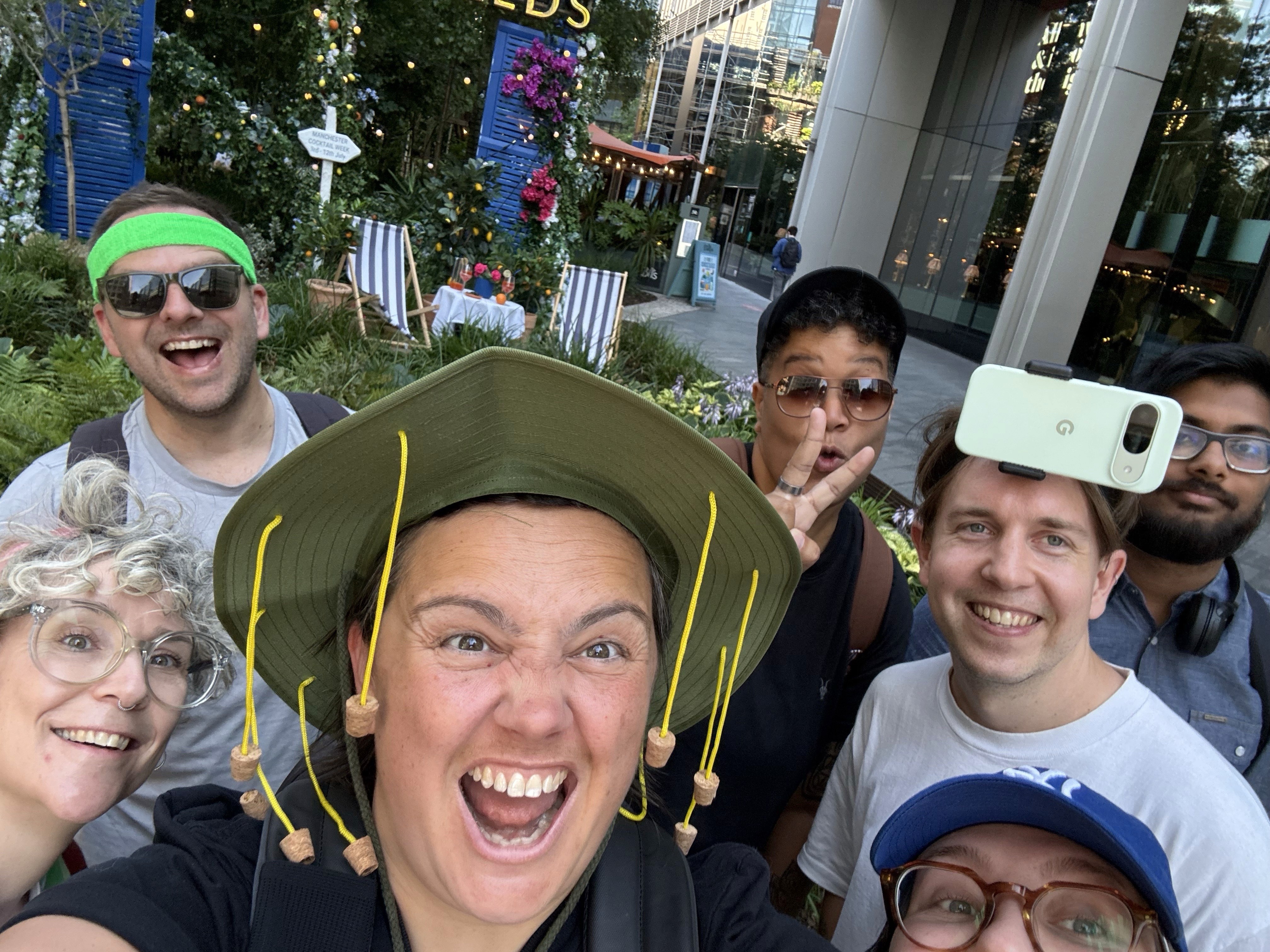
The two-week format created space for students to build relationships as well as skills.
Goodwill alone doesn't transfer
Valtech had supported UCEN students through talks, mentoring and portfolio reviews for years, but each interaction was largely rebuilt from scratch. The students who benefited most were often those already confident enough to ask.
To support more consistently, we needed a structure that did not rely on the right student knowing the right person, or each organiser reconstructing the experience from memory.
Designing the student experience
I led the design and delivery of a structured two-week experience covering onboarding, specialist sessions, project exposure, portfolio support, and opportunities to build lasting professional connections.
The programme brought in ten specialists to run seven sessions across research, brand strategy, service design, design systems, internal branding, motion and storytelling. Every student also received dedicated portfolio and CV feedback.

Students worked through a live-style brief, aided by our specialist sessions, before presenting their thinking to the wider team for feedback.

Building the system behind the placement
Behind the student experience, I created the documentation needed to run the programme consistently — from student onboarding and communications to internal planning, session guidance, IT and legal requirements. I brought these materials into a reusable knowledge base so future placement leads would not need to rebuild the programme from scratch.

Before the placement
Student onboarding guide
Schedule, expectations, and practical details in one place.

Behind the placement
Placement lead playbook
Steps, responsibilities, and templates for running the programme.

After the placement
Student retro and iteration log
Feedback on what worked, what was unclear, and what to change — all the while introducing students to the "retro" format.
The framework created consistency, not rigidity
The most important decisions were not about the timetable. They were about treating students as professionals from day one, shaping sessions around their needs rather than what was easiest to deliver, and ensuring each student received individual support.
Documenting the programme created a consistent baseline without prescribing every future placement. New leads can reuse the structure while adapting the experience around each cohort.
That flexibility also allowed us to include Eva, a Valtech colleague who was exploring a move into design. While she came to the programme through a different route, she benefited from the same exposure, support, and opportunities to develop her practice.

The placement opened my eyes to the different opportunities available in the industry and motivated me to keep developing my skills and portfolio.
Eva Wollaston
Valtech colleague exploring a move into design

If you'd asked me at the start of the placement, I would've said idea generation was one of my weaknesses. By the end, it had become one of my favourite parts of the process.
Sasha Hawkes
UCEN Manchester Graduate
Design something that outlasts you
The structures that make the next round of work possible have always mattered more to me than the polished output. Mentorship is no different. Showing up matters, but so does making it easier for the next person to continue the work. The aim wasn't to create a placement that depended on me, or any specific person. It was to create one that could continue regardless of who owned it.